How Are Acrylic Picture Frames Shaping the Way Visual Content Is Presented in Contemporary Interiors?
2025-12-17
Acrylic picture frames have become a widely adopted display solution across residential, commercial, and institutional environments. Known for their transparent structure and clean visual presentation, these frames are used to showcase photographs, certificates, artwork, menus, signage, and branding materials.
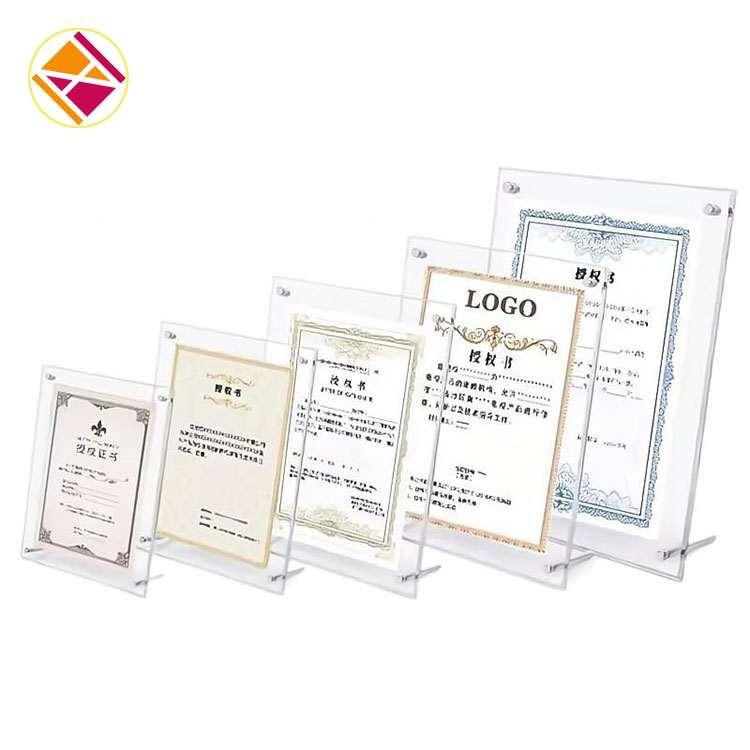
An acrylic picture frame is manufactured from polymethyl methacrylate (PMMA), a lightweight yet durable thermoplastic that offers high clarity and structural stability. Compared with traditional glass frames, acrylic frames provide enhanced impact resistance and consistent optical performance, making them suitable for high-traffic areas such as offices, retail spaces, hotels, galleries, and public buildings.
From a structural standpoint, acrylic picture frames are typically composed of two or more precision-cut panels secured through magnetic fasteners, metal standoffs, screws, or edge-polished bonding. This modular construction allows for easy image replacement while maintaining a refined appearance. Thickness, edge finish, mounting method, and dimensional accuracy all play a critical role in determining how the frame performs over time.
Below is a concise specification overview that highlights common technical parameters associated with professional-grade acrylic picture frames:
| Parameter | Typical Specification Range |
|---|---|
| Material | PMMA (Acrylic Sheet) |
| Sheet Thickness | 2 mm – 20 mm |
| Transparency | Up to 92% light transmission |
| Edge Finish | Diamond-polished or flame-polished |
| Mounting Options | Magnetic, wall-mounted standoff, desktop |
| Surface Treatment | UV-resistant, anti-scratch coating |
| Custom Sizes | Available from small formats to large panels |
These parameters directly influence usability, installation flexibility, and overall presentation quality. Precision manufacturing ensures tight tolerances, smooth edges, and consistent thickness, which are essential for professional display standards.
The central objective of this discussion is to explore how acrylic picture frames are engineered to meet evolving display requirements while maintaining reliability, visual clarity, and adaptability across multiple environments.
How Do Acrylic Picture Frames Perform Across Different Use Scenarios?
Acrylic picture frames are used in a wide range of scenarios, each placing distinct demands on material performance and structural design. In residential settings, frames are commonly used for family photographs, art prints, and decorative wall arrangements. In these applications, clarity, safety, and ease of maintenance are primary considerations.
In commercial and corporate environments, acrylic picture frames often serve a functional display role. Offices use them for certificates, corporate values, and informational signage. Retail stores rely on them to present promotional visuals, price information, and branded content. Hospitality spaces such as hotels and restaurants incorporate acrylic frames into wayfinding systems, menu displays, and interior décor elements.
From a performance perspective, acrylic frames offer consistent results due to the material’s inherent properties. Acrylic sheets resist shattering, making them safer than glass in public or high-traffic areas. Their lighter weight reduces wall load requirements and simplifies installation. Additionally, the surface can be treated to resist ultraviolet exposure, helping printed materials maintain color accuracy over extended periods.
Environmental adaptability is another critical factor. Acrylic picture frames perform well under varying temperature conditions and humidity levels, provided they are manufactured with stable PMMA formulations. This stability allows frames to be used in climates ranging from controlled indoor environments to semi-exposed commercial interiors without warping or yellowing.
Cleaning and maintenance also influence long-term performance. Acrylic surfaces can be maintained using non-abrasive cleaners and soft cloths, preserving transparency without compromising structural integrity. When combined with precision-cut edges and high-quality mounting components, the frame maintains alignment and visual balance throughout repeated use cycles.
In summary, acrylic picture frames demonstrate reliable performance across diverse applications by balancing material resilience, visual consistency, and structural precision.
How Is the Market for Acrylic Picture Frames Evolving in Design and Manufacturing?
The market for acrylic picture frames has experienced steady development driven by advances in manufacturing technology and changing display requirements. CNC cutting, laser processing, and automated polishing systems have improved dimensional accuracy and edge quality, enabling more refined and customized frame designs.
Customization has become a defining aspect of acrylic frame production. Buyers increasingly request non-standard dimensions, varying thickness profiles, and tailored mounting systems to accommodate specific display environments. This demand has led manufacturers to adopt flexible production workflows that support low-volume customization alongside large-scale orders.
Material processing techniques have also evolved. Enhanced UV-stabilized acrylic formulations extend service life by reducing discoloration and surface degradation. Anti-static and anti-scratch surface treatments are now integrated into production to improve handling and maintenance characteristics.
Sustainability considerations are influencing material sourcing and production efficiency. Manufacturers are optimizing sheet utilization to reduce waste and exploring recyclable acrylic options. Energy-efficient cutting and polishing equipment further contribute to responsible production practices without compromising quality standards.
Another notable development is the integration of acrylic picture frames into modular display systems. Frames are increasingly designed to work in conjunction with signage rails, cable display systems, and architectural fixtures, allowing for scalable visual communication solutions in commercial spaces.
These manufacturing and design developments indicate a market that prioritizes precision, adaptability, and long-term usability, aligning with the expectations of architects, designers, and procurement professionals.
How Can Buyers Evaluate Acrylic Picture Frames and What Should Be Considered Before Selection?
Selecting an acrylic picture frame requires evaluation beyond basic dimensions. Buyers should assess material clarity, thickness consistency, and edge finishing quality, as these elements directly affect visual presentation. Uniform transparency ensures that displayed content remains the focal point without distortion or haze.
Mounting configuration is another critical factor. Magnetic frames support frequent content changes, while standoff-mounted frames provide a fixed and structured appearance suitable for formal installations. Desktop frames require stable bases and balanced weight distribution to prevent tipping.
Compatibility with printed materials should also be reviewed. Frame thickness must align with the intended media, whether single-sheet photographs, certificates, or layered inserts. Adequate spacing prevents pressure marks and maintains flatness.
Two common questions frequently raised during the evaluation process are addressed below:
Q: How should acrylic picture frames be cleaned to maintain clarity over time?
A: Acrylic picture frames should be cleaned using a soft microfiber cloth and a cleaner specifically formulated for acrylic surfaces. Abrasive materials and ammonia-based cleaners should be avoided, as they may cause micro-scratches or surface clouding. Regular gentle cleaning preserves optical transparency and extends service life.
Q: Are acrylic picture frames suitable for long-term wall display?
A: Yes, when manufactured with UV-resistant acrylic and secure mounting hardware, acrylic picture frames are well suited for long-term wall display. Proper installation and controlled indoor conditions help maintain dimensional stability and surface clarity over extended periods.
As buyers evaluate suppliers, attention should be given to production capabilities, quality control processes, and customization support. Consistent manufacturing standards ensure that each frame meets dimensional and aesthetic requirements.
Toward the conclusion of the selection process, working with an established brand can streamline communication and ensure reliable outcomes. Zhihao offers acrylic picture frame solutions developed through precision manufacturing and material expertise, supporting a wide range of display applications. For detailed specifications, customization inquiries, or project consultations, interested parties are encouraged to contact us to discuss requirements and implementation options.